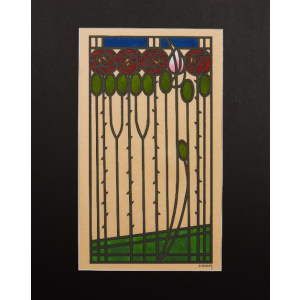
Roycroft

About the Roycroft

CJ Hurley and Barbara Pierce

The Roycroft Arts & Crafts colony was established in 1895 by Elbert Hubbard in East Aurora, New York. It was established to reform manufacturing in America by preserving age-old crafts skills of both Europe and America that were dying a rapid death in the face of Industrial Revolution factory production.

The Roycrofters were concerned with how things were made; prizing the infinite variety found in hand hammered, chiseled, tooled, and wrought artistic goods. Most of all they were concerned with the welfare and preservation of the craftsperson, knowing full well that people content in their work are happy, active, and positive participants in society.

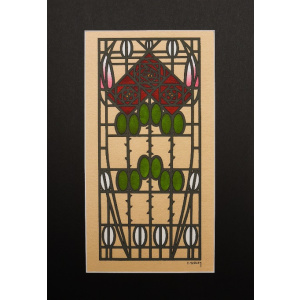
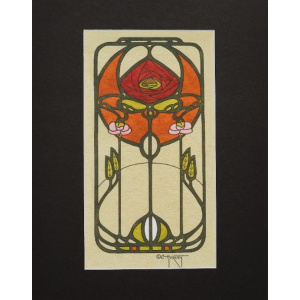
Over one hundred years later, this American Arts & Crafts institution is still alive. As a Roycroft Renaissance Artisan, CJ Hurley has the honor and distinction of working to uphold this century old handcraft tradition. He sees it as a rare opportunity to keep alive an important part of the American Arts & Crafts legacy, and views it as a great responsibility. CJ is among approximately 50 artisans from a variety of disciplines who share the right to use the Roycroft Renaissance mark on their work. Roycroft Renaissance Artisans are dedicated to keeping America’s handcraft tradition alive.

About The Roycroft Mark

The founder of the Roycroft arts colony, Elbert Hubbard, adapted the 17th century mark of Samuel and Thomas Roycroft to create a signature of quality for the work of the Roycrofters. Samuel and Thomas were English bookmakers and Hubbard saw the mark as appropriate to the Roycroft, as bookbinding was the first Roycroft industry.

In 14th century Europe, the mark was also used by a cloister of monks to identify the hand-illuminated copies of the Bible they produced. The production of these hand-lettered tomes began the association of the mark with fine handcraftsmanship.

The term Roycroft means King’s Craft, a term reserved for the workers of the Medieval Guild system who were highly skilled, and whose work was made for the King. These artisans to the King’s were unrivaled in the Medieval European world.